
No-Ham-anuary: a retrospective on reducing my intake of processed meat
Looking back on three years of no ham sandwiches.

Glazed ham, rich prosciutto, smokey paprika and salted pastrami. All these have been staples in my sandwiches at home or in the office, offering quick, delicious fillings that provided convenience.
However a few years ago I decided as a small change, to give up on these sandwich fillings. Like an MVP version of going vegetarian or a free tier subscription to veganism.
(Before we continue, I just want to emphasise that this is not a joke article, its now coming up to three years, as of December 2025 in which I have had little to no processed meat.)
The Decision Point
I am not normally one for New Year's resolutions. To me, they often seem like a vehicle for failure; a commitment to a massive overhaul that usually runs out of steam once the trial period of January has passed.
However, after reflecting on my diet, which on the whole is pretty good, I wanted to identify some areas of improvement that would be novel. I didn't want to just "eat less" but try and optimise my food stuffs.
As a software engineer I looked at my food as you would a dependency in a computer system. What were the food stuffs I was using a lot in my daily intake, what things were indulgent (think expensive API calls), or not the most nutritionally optimal. After a short while thinking about it, I could see a few areas:
- Chocolate; a mainstay for my sweet fix, a hard thing to remove.
- Squash: a fruit cordial drink that you dilute with water, giving a nice flavour. It has a sugar taint to it, but I wouldn't class it as bad as soft drinks.
- Bread: bread is life for me, especially in sandwich form, even after migrating to wholemeal breads.
Cutting out these food stuffs entirely seemed too extreme, like rewriting an application from scratch; it is hard to implement, high risk and is bound to make your brain (the CTO) start complaining and ask you to rollback to your old self by February.
But could I do a refactor on these food stuffs?
Instead of rewriting my lunchtime snack ritual which would consist of a chocolate bar, could I swap it for a few squares of rich dark chocolate? Rather than fruit squash, could I just try a lower sugar flavouring or even try switching to water?
A way to express this as code would be like so.
public class Twix implements Snack, Chocolate {}
public class DairyMilk implements Snack, Chocolate {}

public class DarkChocolate implements Snack, Chocolate {} //healthier


// user.setLunchSnack(new Twix()); // deprecated
user.setLunchSnack(new DarkChocolate()); //better
Some pseudo code to
This thought pattern written as code isn't unique to engineers—everyone battles with food optimisation in the supermarket aisles. But where engineers differ is that we are obsessed with modularity.
From this I then came to the last food stuff on my hit list, bread!
As I mentioned earlier, bread is life for me. When I was a kid my nickname was the, "bread monster". I could demolish loaves before anyone had a chance to make some toast with them. As I got older I realised that wasn't a sustainable lifestyle and started sun-setting my white loaf for healthier wholemeal options.
This bread optimisation seemed to be maxed out, where could I optimise from here? Rye-bread, no thanks.
Bread however is never eaten mostly in isolation, it comes with other food components like salad (ok), cheese (okayish) and ham (not great / not terrible). If bread (the container) was fine, then the issue had to be the payload (the stack) I was injecting into it. And nine times out of ten, that payload was processed ham.
Sandwiches - Layered Architecture
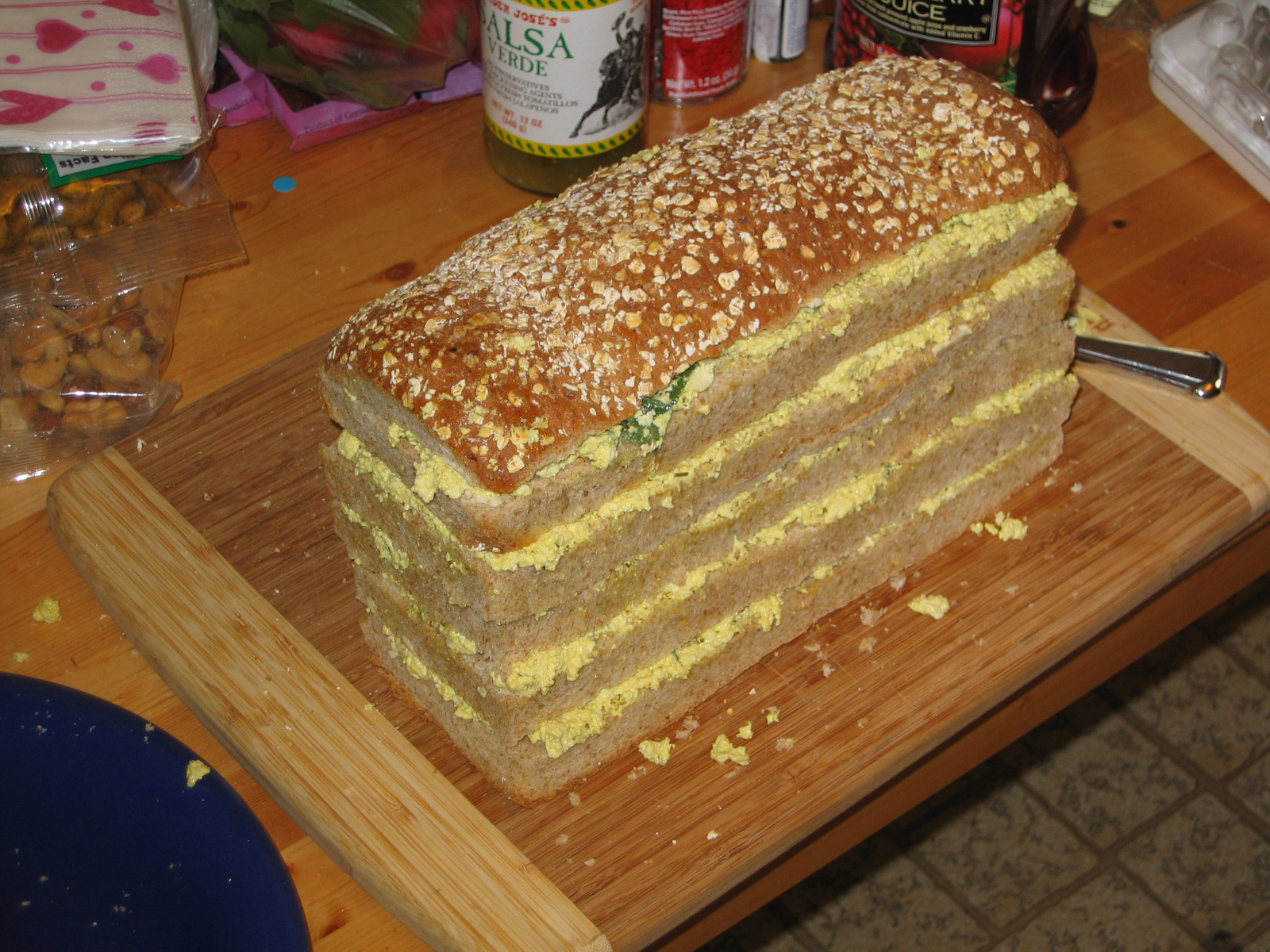
Sandwiches are awesome, tactile and work anytime of the day. You could argue that the Earl of Sandwich was the first UX designer in the bread space; allowing food to be eaten whilst focussing on other activities (gambling, reading, programming).
At home I generally fill my sandwiches with processed meats like chorizo or honey glazed ham. We all know these meats are tasty but that tastiness comes at a price in more ways than one.
In the current trends of 2025; K-pop, AI and UPF. Ultra-processed foods I would say has hit its peak. These chemicals are increasingly being connected with illnesses and health issues.
Specifically, the WHO has classified processed meats as Group 1 carcinogens—the same category as tobacco. When we eat these, the nitrates interact with our stomach acid to create nitrosamines which damage our DNA, increasing the risk of cancers and heart disease.
Another aspect that is often overlooked with processed meats is the cost factor, you are paying for a piece of meat to be prepared (flavoured, cooked, matured, sliced and packaged) for your convenience. Some stores offer premium quality products and others provide more discounted options. I would argue though you are still paying ontop for this convenience.
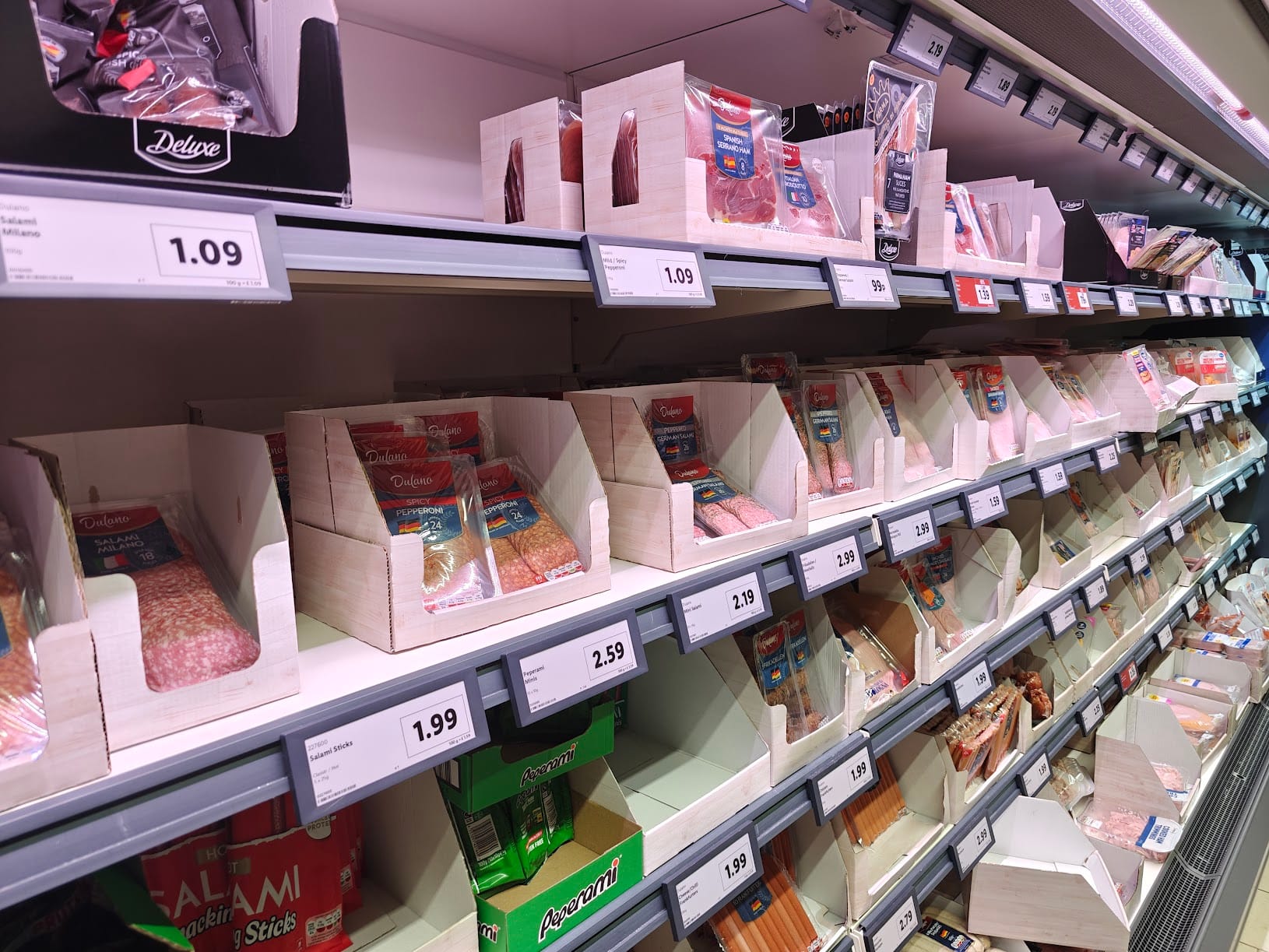
Beyond health and cost, there is the issue of intent. These meats are too convenient. You slap a bit of ham on and go, treating lunch like a background task that needs to be completed so your main job can resume, which often times is just watching something on YouTube (that isn't very mentally nutritious either).
My very good Greek friend Stefanos, always laments at how British people treat lunch. He thinks lunch is a sacrosanct time away from work that should be respected with a decent meal or decent sandwich. He's not wrong—we have a cultural problem with lunch in the UK.
So with all this in mind, I had my three reasons to ditch processed meats:
- Health
- Cost
- Mindfulness
Making a good sandwich
Rather than obsess over individual ingredients, I started thinking about what makes a filling actually good.
Time became a weird metric; the longer a sandwich took to make, the more I was engaged in the process and not having my brain in work mode. Cost mattered, but not in a "cheapest option" way, more in a "am I paying for actual food or just packaging" way.
I'm not going to pretend I created some scientific formula here, but I did start mentally scoring my options based on five factors:
- Nutrition (N): 1 = Ultra-processed chemicals, 5 = Whole food that'll actually sustain me
- Interest (I): 1 = Boring beige sandwich, 5 = Something I'd genuinely look forward to
- Processing (P): 1 = Minimal/none, 5 = Been through multiple factories
- Cost (C): 1 = Cheap ingredients or leftovers, 5 = Premium pre-packed convenience
- Time (T): 1 = Slap it together in 30 seconds, 5 = Requires actual cooking/preparation
The key insight: high scores are bad for P and C (more processing and cost), but high scores are good for N, I, and T (better nutrition, more interesting, more mindful).
This gave me a Sandwich Filling Score (SFS) formula "NITPiCk"
SFS = (N + I + T) / (P + C)NITPC "Nitpick formula"
Using this formula you can immediatley sum up your filling options with a PASS or FAIL.
A score below 1 is basically eating expensive chemicals, a score from 3-5 is ok and anything above that is a big win.
| Filling | N | I | T | P | C | SFS | Status |
|---|---|---|---|---|---|---|---|
| The Old Guard | |||||||
| Packet Glazed Ham | 1 | 2 | 1 | 5 | 4 | 0.44 | ❌ FAIL |
| Chorizo / Salami | 1 | 4 | 1 | 5 | 4 | 0.67 | ❌ FAIL |
| Tinned Corned Beef | 1 | 2 | 1 | 5 | 3 | 0.50 | ❌ FAIL |
| The New | |||||||
| Leftover Roast Chicken | 5 | 4 | 3 | 1 | 1 | 6.00 | ✅ WIN |
| Egg and Avocado | 5 | 4 | 4 | 1 | 2 | 4.33 | ✅ WIN |
| Houmous & Fried Egg | 4 | 4 | 4 | 1 | 1 | 6.00 | ✅ WIN |
| Halloumi & Veg | 4 | 5 | 5 | 2 | 2 | 3.50 | ✅ WIN |
| Leftover Fish & Houmous | 4 | 4 | 3 | 2 | 1 | 3.67 | ✅ WIN |
It's immediately obvious that the old guard processed meats fail immediately. Meanwhile, the new options all clear 3. 0+ because they involve actual food and actual cooking.
However with any system there are edge cases, and a few of them I encountered at Christmas time with the leftover Christmas ham cooked in spices and ginger beer.
| Filling | N | I | T | P | C | SFS | Status | Logic |
|---|---|---|---|---|---|---|---|---|
| Home-Roast Christmas Ham | 3 | 5 | 4 | 2 | 1 | 4.00 | ✅ WIN | It's a roast, not factory ham. Passes comfortably. |
| Quality Tinned Fish (sardines/salmon/mackerel) | 5 | 4 | 3 | 2 | 2 | 3.00 | ✅ WIN | Just fish in a tin. Minimal processing, solid win. |
| Industrial Peanut Butter | 3 | 3 | 1 | 5 | 2 | 0.86 | ❌ FAIL | Sugar and palm oil hell. Hard fail. |
| 100% Natural Nut Butter | 4 | 4 | 2 | 1 | 3 | 2.50 | ✅ WIN | Passes, but still pretty convenient. Acceptable. |
| Home-Fried Bacon | 2 | 5 | 4 | 3 | 2 | 2.20 | ✅ WIN | Still processed meat, but the time investment redeems it. |
| Store-Bought Falafel | 3 | 3 | 2 | 4 | 3 | 1.14 | ❌ FAIL | Sounds healthy, but it's fried in seed oils. Barely scrapes by. |
| Smoked Salmon | 4 | 5 | 2 | 2 | 5 | 1.57 | ✅ WIN | Expensive, but the nutrition and taste just about justify it. |
So it's not a perfect system, but it quickly helps draw up lunch plans. This formula doesn't account for situations outside of the working lunch; so post-Christmas snacking, work parties and raiding your friend's fridge for a sandwich whilst gaming do not apply.
Consider these as out of scope. If you want me to refactor the SFS formula to handle party buffets and late-night gaming snacks, you'll need to file a feature request here.
Three Years Later: Was It Worth It?

Yes!
I'm not going to pretend I have blood test results showing my cholesterol dropped or that I've lost tons of weight (I haven't tracked either). I can't point to hard data that says my cancer risk has decreased, even if the WHO says it probably has.
Does lunch feel different now, it does but after a few years doing this its hard to tell. It definitely was hard giving up ham at first, even at times I found myself reaching for a packet of ham in the supermarket. Nowadays I don't have that reflext.
I still love bacon and I think its a food that sums of this whole philosophy that nutrition, time and health. Bacon isn't healthy but it is a lesser evil when you take the time to cook it and enjoy it with some lettuce in a BLT.
That sandwich feels like a nutritious treat that I am looking forward to making away from my desk. The ingredient isn't the problem—it's the context and the convenience.
If something is too convenient then you are relying on a process (factory) doing the work for you and that comes with chemicals which we all pay a price for.
Measuring Pennies
On the subject of price, I was reluctant to add this section as I do not track spending habits for my food shopping. However in the eternal need to add anecdata, I have tried to approximate my savings by cutting out pre-processed meats. Whether it has saved me any money or just been eaten away by other food stuffs I don't know.
| Food | Price £ | Purchases per month | Yearly Cost |
|---|---|---|---|
| Sliced Chorizo | 2.25 | 4 | 108 |
| Roast Beeff | 3.60 | 1 | 43 |
| Breaded Ham | 3.00 | 2 | 72 |
So on a yearly basis I have cut out over £200 in bills towards these food items, which as of 2025, should be around £600 in total.
Conclusion
This whole journey started as a parody of New Years resolutions but has ended up as a lasting positive change in my lifestyle. "No-Ham-anuary" isn't really accurate to what I have done, but trying to title this blog post, "No-pre-cooked-meats-anuary" doesn't have much of a ring to it as the first one does.
Taking the time to think about what I am going to have for lunch, prepare it and then enjoy it is the ultimate win from this MVP task, the reduction in eating cold pre-processed meats is just a bonus .
This pattern of refactoring everyday habits can work in other areas our lives, where quick wins do add up.
I hope this article is interesting and helpful to other people looking to make small changes they want to make.